
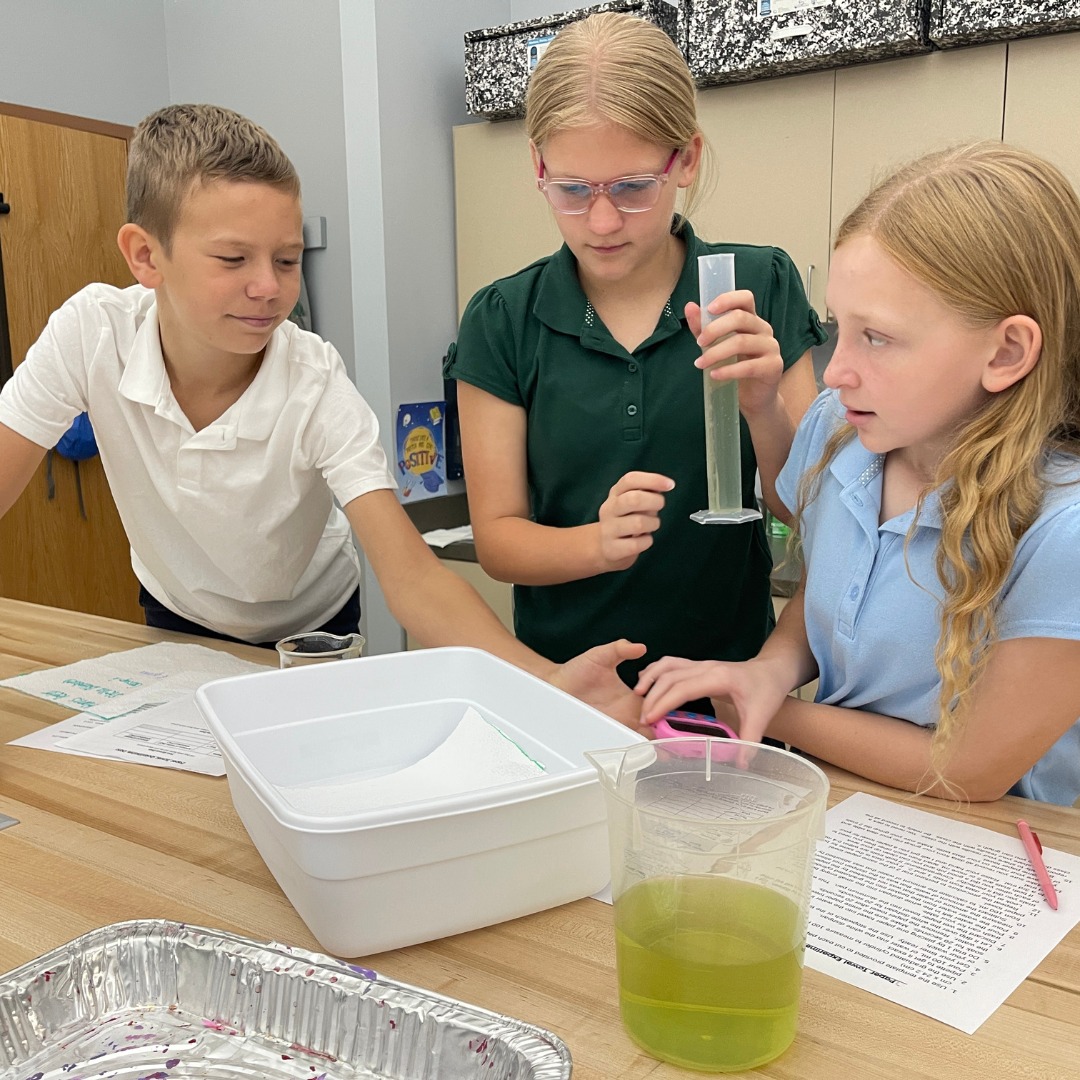
 At Resurrection Lutheran School, we understand that effective Christian STEM education involves helping students see the wonder of creation while developing critical thinking skills, problem-solving abilities, and innovative approaches to real-world challenges. Our approach to STEM education integrates faith-based perspectives with cutting-edge curriculum, preparing students for academic excellence in high school and beyond.
Located in Lochmere and serving families throughout western Wake County, our middle school program has earned recognition for its balanced approach to education that emphasizes both academic rigor and character development. Students who graduate from our educational program consistently demonstrate readiness for honors-level coursework and advanced placement opportunities in high school.
Understanding STEM Education in Middle School
Science, Technology, Engineering, and Mathematics education during the middle school years plays a crucial role in shaping students' future academic and career trajectories. Research consistently shows that strong foundations in these areas during grades six through eight significantly impact students' confidence and success in advanced coursework throughout high school and college.
The Importance of Middle School STEM Focus
Middle school represents a critical period for STEM engagement, as students develop abstract thinking abilities and begin to understand complex relationships between different subjects. During these formative years, students benefit from:
- Hands-on learning experiences that make abstract concepts tangible and understandable
- Project-based learning that demonstrates real-world applications of mathematical and scientific principles
- Collaborative problem-solving that mirrors professional STEM environments
- Integration across disciplines showing connections between science, mathematics, and technology
- Character development that emphasizes ethical applications of scientific knowledge
Unique Aspects of Christian STEM Education
Our approach to christian stem education recognizes that scientific inquiry and faith can work together harmoniously. Students learn to appreciate the complexity and beauty of creation while developing rigorous analytical skills and scientific reasoning abilities.
This integrated approach helps students understand that:
- Scientific discovery reveals the intricate design and order in creation
- Mathematical principles demonstrate universal truths that govern natural systems
- Technological innovation can serve humanity and stewardship of resources
- Engineering solutions address real-world problems with ethical considerations
- Critical thinking serves both academic pursuits and moral reasoning
Resurrection Lutheran School's Middle School STEM Philosophy
Our stem middle school program builds upon a foundation of academic excellence while integrating character development and ethical reasoning into all aspects of scientific and mathematical education. Read our School Life page for more.
Core Educational Principles
Our middle school STEM curriculum operates on several fundamental principles that guide both instruction and student development:
Academic Excellence: We maintain high expectations for student achievement while providing appropriate support and differentiated instruction to help every student reach their potential. Our curriculum follows North Carolina State Standards as a baseline while incorporating national standards and extension activities.
Character Integration: Students learn to apply ethical reasoning to scientific questions and technological applications, developing wisdom alongside knowledge. This approach helps students understand their responsibility as future leaders in STEM fields.
Real-World Application: Our science curriculum private school programming emphasizes practical applications of theoretical concepts, helping students understand how their learning connects to future careers and community service opportunities.
Collaborative Learning: Students work together on projects and investigations, developing communication skills and teamwork abilities essential for success in professional STEM environments.
Middle School Program Structure
Our middle school serves students in grades six through eight, with each year building systematically upon previous learning while introducing increasingly sophisticated concepts and methodologies.
Grade 6 Focus Areas: Students begin with foundational concepts in earth science, introductory physics, and environmental science. Mathematics instruction emphasizes pre-algebra concepts and problem-solving strategies. Technology integration includes basic programming concepts and research skills.
Grade 7 Advancement: Seventh-grade students engage with life science concepts, chemistry fundamentals, and more advanced mathematical reasoning. Engineering design challenges introduce students to systematic problem-solving methodologies.
Grade 8 Preparation: Eighth-grade students tackle advanced physical science concepts, algebra applications, and sophisticated engineering projects. Students eligible for advanced coursework may take the 8th grade Core 1 End of Course Exam, demonstrating readiness for high school honors programs.
Comprehensive Science Curriculum
Our science curriculum private school approach emphasizes inquiry-based learning, hands-on experimentation, and real-world problem solving while maintaining rigorous academic standards.
Laboratory and Experimental Learning
Students engage in extensive laboratory work that develops both practical skills and theoretical understanding:
- Weekly laboratory sessions that reinforce classroom concepts through hands-on experimentation
- Field studies and outdoor learning that connect classroom learning to natural environments
- Data collection and analysis using both traditional methods and modern technology
- Scientific writing and communication that develops technical communication skills
- Safety protocols and procedures that emphasize responsible laboratory practices
Integrated STEM Projects
Our curriculum includes substantial project-based learning experiences that integrate multiple STEM disciplines:
- Environmental monitoring projects that combine chemistry, biology, and mathematics
- Engineering design challenges that require mathematical modeling and scientific principles
- Technology integration projects that utilize coding, data analysis, and presentation skills
- Community problem-solving that addresses local environmental and social challenges
Assessment and Evaluation
Student progress is measured through multiple assessment methods that evaluate both content mastery and skill development:
- Traditional assessments that measure content knowledge and understanding
- Project-based evaluations that assess application and synthesis abilities
- Laboratory practicals that demonstrate hands-on skills and safety knowledge
- Portfolio development that showcases growth and learning over time
- Peer collaboration assessments that evaluate teamwork and communication skills
Mathematics Integration and Excellence
Mathematics forms the foundation for all STEM learning, and our program ensures students develop strong computational skills alongside conceptual understanding and problem-solving abilities.
Curriculum Progression and Standards
Our mathematics curriculum follows a carefully planned progression that prepares students for advanced coursework while ensuring solid foundational understanding:
Pre-Algebra Foundations: Students master essential arithmetic operations, fractions, decimals, and percentages while beginning to work with variables and basic algebraic concepts.
Algebraic Thinking: Advanced students progress to formal algebra concepts including linear equations, graphing, and systems of equations.
Geometry Integration: Geometric concepts are woven throughout the curriculum, with emphasis on measurement, spatial reasoning, and geometric proofs.
Statistics and Probability: Students learn to collect, analyze, and interpret data while understanding probability concepts and their real-world applications.
Problem-Solving Emphasis
Our mathematics instruction emphasizes multiple problem-solving strategies and encourages students to approach challenges from various perspectives:
- Multi-step problem solving that mirrors real-world applications
- Mathematical modeling that connects abstract concepts to practical situations
- Technology integration that includes graphing calculators and computer-based analysis
- Collaborative problem solving that develops communication and reasoning skills
- Cross-curricular connections that demonstrate mathematics applications in science and engineering
Technology Integration and Digital Literacy
Modern STEM education requires sophisticated technology skills, and our program ensures students develop competency with current tools while maintaining appropriate balance and ethical understanding.
Educational Technology Tools
Students work with various technology platforms that support learning while developing digital literacy skills:
- Computer programming introduction through age-appropriate platforms and languages
- Data analysis software for scientific investigations and mathematical modeling
- Design and modeling programs for engineering and architectural projects
- Research databases and online resources for independent investigation
- Presentation software for communicating findings and proposals
Digital Citizenship and Ethics
Our technology curriculum includes substantial emphasis on responsible use and ethical considerations:
- Online safety and privacy awareness and practical applications
- Digital footprint understanding and reputation management
- Copyright and intellectual property respect and proper attribution
- Collaborative online work with appropriate supervision and guidelines
- Screen time balance and healthy technology habits
At Resurrection Lutheran School, these values are woven into daily interactions, curriculum decisions, and school policies.
Engineering and Design Thinking
Engineering education helps students apply scientific and mathematical knowledge to solve real-world problems while developing creativity and innovation skills.
Design Process and Methodology
Students learn systematic approaches to problem-solving that mirror professional engineering practices:
- Problem identification and needs assessment
- Research and investigation of existing solutions and constraints
- Brainstorming and ideation with emphasis on creative thinking
- Prototype development and testing methodologies
- Evaluation and iteration based on performance data and feedback
Project Examples and Applications
Our engineering curriculum includes diverse projects that address various interests and applications:
- Structural engineering challenges including bridge and tower construction
- Environmental engineering projects addressing water quality and conservation
- Mechanical engineering investigations with simple machines and robotics
- Computer engineering introduction through programming and automation projects
Extracurricular STEM Opportunities
Beyond classroom instruction, our program includes various extracurricular activities that allow students to explore STEM interests and develop leadership skills.
Clubs and Organizations
Students can participate in several STEM-focused activities:
- Science Fair participation with opportunities for individual and group projects
- Mathematics competitions including local and regional contests
- Technology clubs focused on programming, robotics, and digital media
- Environmental stewardship projects that serve the broader community
Leadership Development
Advanced students have opportunities to develop leadership skills through:
- Peer tutoring programs that reinforce learning while developing teaching skills
- Project leadership roles in collaborative investigations and presentations
- Community service projects that apply STEM knowledge to local challenges
- National Junior Honor Society participation emphasizing scholarship and service
Preparing Students for High School Success
Our comprehensive approach to STEM education ensures students graduate with the knowledge, skills, and character necessary for success in advanced coursework and future careers.
Academic Preparation Outcomes
Students completing our program demonstrate:
- Strong foundational knowledge in all STEM subject areas
- Critical thinking abilities that transfer across disciplines
- Problem-solving confidence with complex, multi-step challenges
- Communication skills for technical and general audiences
- Collaboration abilities essential for professional success
- Ethical reasoning that guides decision-making in scientific contexts
High School Transition Support
We maintain relationships with area high schools to ensure smooth transitions and appropriate course placement:
- Transcript documentation that clearly communicates student achievements
- Recommendation letters that highlight student strengths and potential
- Course placement guidance based on demonstrated competency
- Study skills preparation for more independent learning environments
Community Connections and Real-World Applications
Our STEM program emphasizes connections between classroom learning and community service, helping students understand how their knowledge can benefit others.
Local Partnership Opportunities
Students engage with local organizations and professionals through:
- Field trip experiences to research facilities, universities, and technology companies
- Guest speaker programs featuring professionals in various STEM careers
- Community problem-solving projects that address local environmental and social challenges
- Service learning opportunities that combine academic knowledge with community benefit
Career Exploration and Awareness
Our program helps students understand diverse STEM career paths while maintaining focus on character development and service to others.
Students explore careers in fields such as:
- Medical and health sciences with emphasis on service to others
- Environmental science and conservation focusing on stewardship responsibilities
- Engineering and technology that improve quality of life
- Education and outreach that share knowledge with others
- Research and development that advances human understanding
Frequently Asked Questions
What makes your STEM program different from other middle schools?
Our program integrates rigorous academic standards with character development and faith-based perspectives, helping students understand both the complexity of creation and their responsibility to use knowledge ethically.
How do you prepare students for high school STEM courses?
Students complete comprehensive coursework that exceeds state standards, with eligible eighth-graders taking Core 1 End of Course Exams to demonstrate readiness for honors-level high school courses.
What technology do students use in your program?
Students work with various platforms including programming languages, data analysis software, design programs, and research databases, all with appropriate supervision and digital citizenship training.
Are there opportunities for advanced students?
Yes, we provide differentiated instruction, advanced project opportunities, leadership roles, and acceleration options for students ready for additional challenges.
How do you balance screen time with other learning activities?
Our program emphasizes hands-on laboratory work, field studies, collaborative projects, and real-world applications alongside appropriate technology integration with established time limits and balance.
Supporting Your Child's STEM Journey
For families seeking a comprehensive STEM program that prepares students for academic success while maintaining strong character development, Resurrection Lutheran School offers an exceptional educational experience. Our approach to christian stem education demonstrates that rigorous academic preparation and faith-based values work together to develop well-rounded students ready for future challenges and opportunities.
To learn more about our stem middle school program or to schedule a campus visit, please contact us. We look forward to sharing how our approach to STEM education can support your child's academic and personal development.
